The Diploma in Pharmacy is a professional pharmacy program designed to provide students with fundamental knowledge of pharmaceutical sciences, medicines, dispensing, healthcare and community pharmacy practice.
D.Pharm provides students with essential pharmaceutical knowledge required to understand medicines, dosage forms, dispensing procedures and healthcare practices.
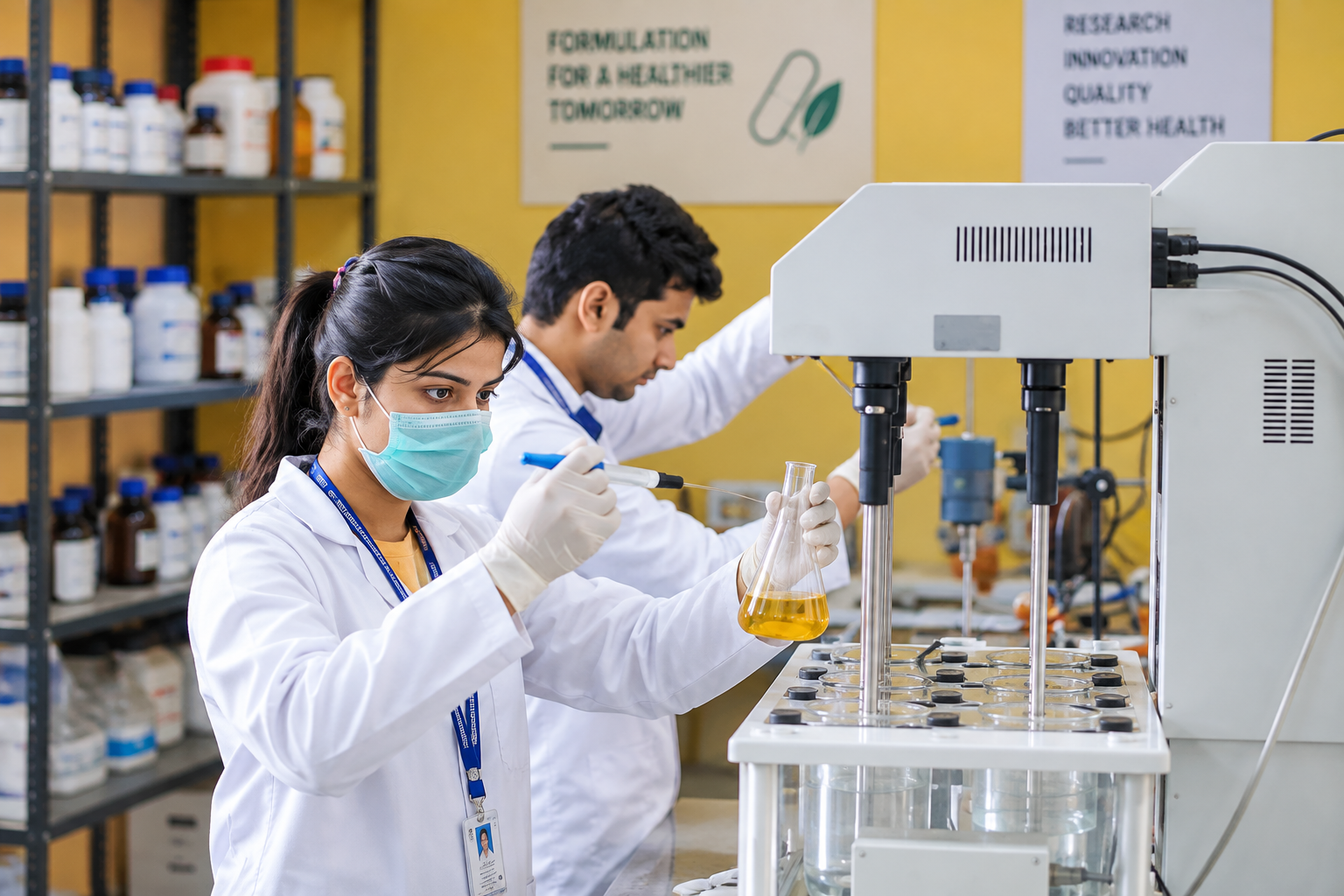
The program combines classroom education with laboratory practicals and professional pharmacy training, helping students develop the knowledge and skills required for entry-level pharmacy practice.
Students also gain an understanding of patient communication, medicine storage, prescription handling and responsible use of medicines.
2 years of professional diploma education with theoretical and practical learning.
H.S.C. / 10+2 Science with the prescribed subjects, subject to applicable admission requirements.
As provided in the institute's program information.
Pharmaceutical sciences, dispensing, medicine handling, laboratory practice, patient care and community pharmacy.
The D.Pharm curriculum develops fundamental pharmaceutical knowledge and practical pharmacy skills.
| No. | Subject | Key Areas |
|---|---|---|
| 01 | Pharmaceutics | Dosage forms, pharmaceutical preparations, dispensing, packaging and storage. |
| 02 | Pharmaceutical Chemistry | Pharmaceutical inorganic chemistry, organic chemistry, drug identification and basic analysis. |
| 03 | Pharmacology | Drug actions, therapeutic uses, adverse effects and basic toxicology. |
| 04 | Pharmacognosy | Medicinal plants, natural drugs, crude drug identification and herbal medicines. |
| 05 | Hospital & Clinical Pharmacy | Hospital pharmacy, prescription handling, patient counselling and drug information. |
| 06 | Community Pharmacy | Community pharmacy practice, health education, patient communication and medication safety. |
Practical education helps students connect pharmaceutical theory with real pharmacy situations.
Learn the basic process of reading prescriptions and preparing medicines for dispensing.
Gain practical exposure to formulation, pharmaceutical chemistry and basic analytical procedures.
Understand appropriate storage, handling and organization of medicines.
Develop communication skills for providing basic medicine-use information to patients.
Opportunities in retail and community pharmacy environments.
Work opportunities in hospitals, clinics and healthcare institutions.
Explore opportunities in pharmaceutical manufacturing and related support functions.
Develop professional skills for pharmacy support and medicine-related services.
Admission and eligibility are subject to the applicable rules and regulations of the concerned authorities and affiliating institutions.