The Bachelor of Pharmacy is a comprehensive undergraduate degree program that develops scientific, pharmaceutical, clinical and professional knowledge for careers in the pharmaceutical and healthcare sectors.
The B.Pharm program provides comprehensive education in pharmaceutical sciences, covering medicines, drug development, formulation, analysis, pharmacology and pharmacy practice.
Students receive a combination of theoretical education, laboratory practicals and professional learning to develop the scientific and technical skills required in modern pharmacy.
The program also introduces students to clinical pharmacy, pharmaceutical industries, research methodology, regulatory concepts and healthcare practices.
4 years of undergraduate degree education including theory, laboratory and practical learning.
H.S.C. / 10+2 Science with the prescribed subjects and applicable admission requirements.
As provided in the institute's program information.
Pharmaceutical sciences, drug development, clinical pharmacy, pharmaceutical technology, analysis and research.
The B.Pharm curriculum covers pharmaceutical sciences, clinical pharmacy, industrial pharmacy and professional practice.
| No. | Subject | Key Areas |
|---|---|---|
| 01 | Pharmaceutics | Physical pharmacy, dosage forms, formulation technology, industrial pharmacy and drug delivery systems. |
| 02 | Pharmaceutical Chemistry | Organic chemistry, inorganic chemistry, medicinal chemistry, pharmaceutical analysis and quality control. |
| 03 | Pharmacology | Drug actions, therapeutic applications, clinical pharmacology, chemotherapy and toxicology. |
| 04 | Pharmacognosy | Medicinal plants, natural products, phytochemistry, herbal medicines and crude drug evaluation. |
| 05 | Pharmacy Practice | Hospital pharmacy, clinical pharmacy, community pharmacy, patient counselling and pharmacotherapeutics. |
| 06 | Pharmaceutical Microbiology | Microorganisms, sterilization, aseptic techniques, contamination control and microbiological testing. |
| 07 | Biochemistry | Biomolecules, metabolism, enzymes, biochemical processes and clinical biochemistry. |
| 08 | Pharmaceutical Jurisprudence | Pharmacy laws, professional ethics, regulatory requirements and legal responsibilities. |
| 09 | Research Methodology | Research design, scientific literature, biostatistics, data interpretation and scientific communication. |
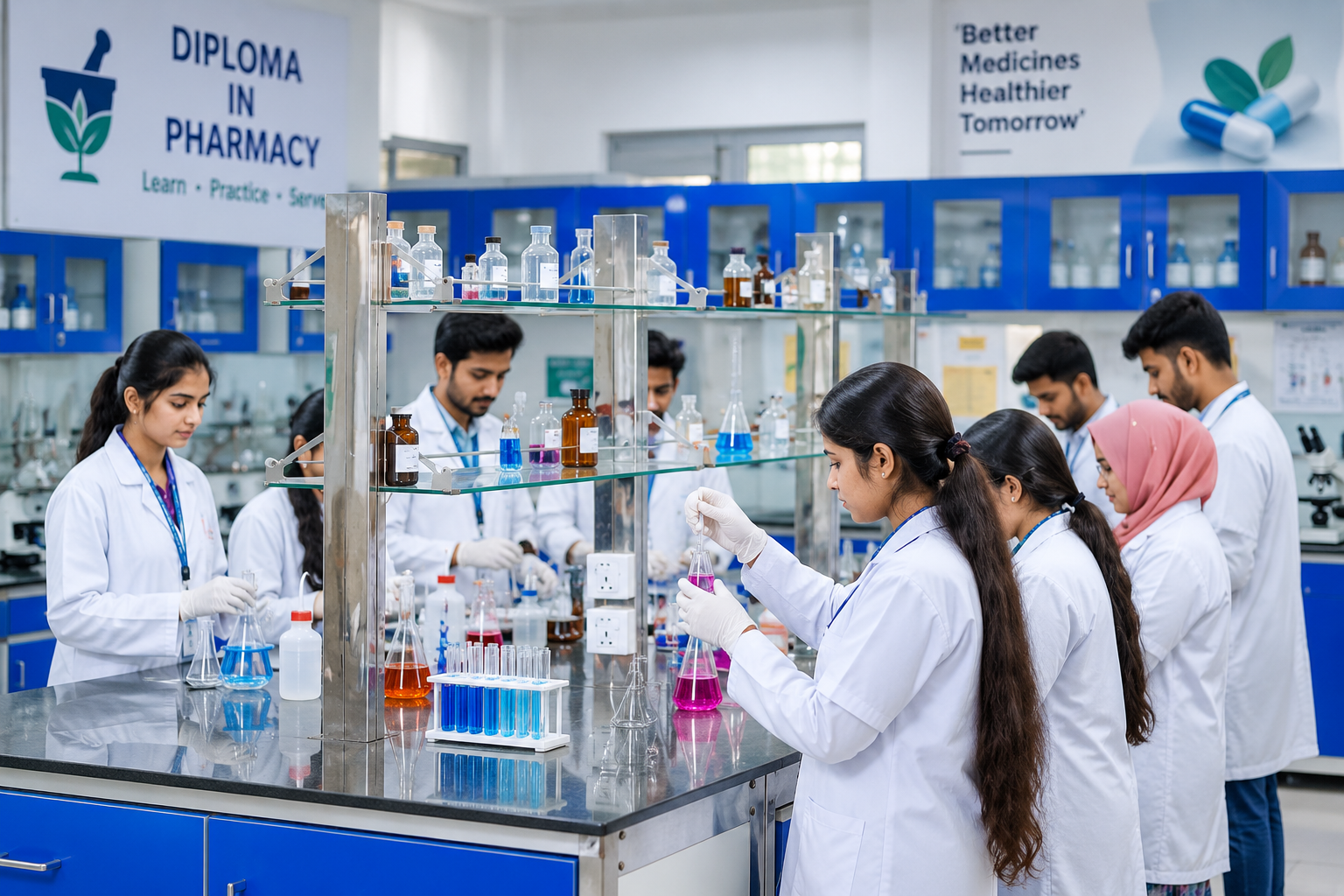
Practical and laboratory education helps students develop scientific and professional skills for the pharmacy sector.
Practical training in formulation, pharmaceutical chemistry, analysis and microbiology.
Understand medicines, therapeutic applications, patient care and rational medicine use.
Develop research methodology, laboratory investigation, data analysis and scientific thinking.
Develop technical communication, patient counselling and professional presentation skills.
Opportunities in production, formulation, quality control, quality assurance and technical functions.
Professional opportunities in hospitals, clinics and healthcare institutions.
Opportunities in pharmaceutical research, drug development and laboratory work.
Work related to pharmaceutical documentation, regulatory compliance and product requirements.
Patient-focused pharmacy services and community healthcare opportunities.
Pursue postgraduate education and specialized professional opportunities.
Admission and eligibility are subject to the applicable rules and regulations of the concerned university, authorities and regulatory bodies.